
How AI Is Changing Luxury Real Estate Search (And What It Means For Your Home)
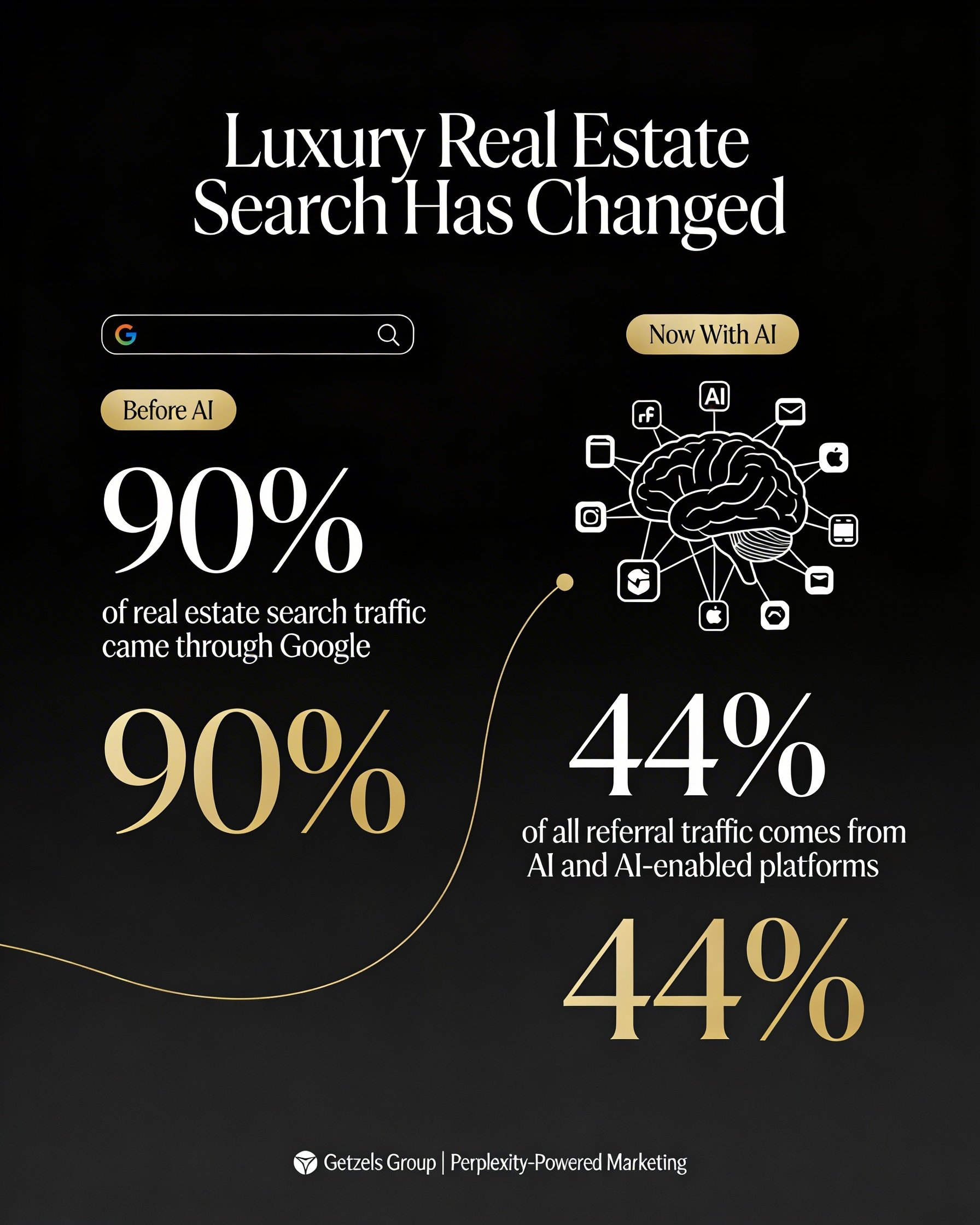
AI is adding a new layer to how luxury buyers search for homes. Google and the portals still matter, but more high net worth clients are also asking AI tools where they should buy and which homes truly stand out. If you are selling in Los Angeles, Calabasas, or Woodland Hills, your listing strategy now has to work for both search engines and answer engines so your home shows up in those conversations.
Luxury real estate search is going through a quiet but very real upgrade.
For years, almost every serious buyer started the same way: open Google, type in a neighborhood and price point, then scroll through pages of results. In my own business, I’ve watched clients discover homes in Los Angeles, Calabasas, and Woodland Hills this way — “best homes in Calabasas,” “gated communities in Woodland Hills,” “new construction in LA” have been the starting point for countless deals. Today, more and more high net worth buyers are asking AI tools and intelligent platforms much bigger questions first: where should I buy, what’s really happening in this market, which homes and which agents actually stand out for what I need.
The way your property shows up online is changing with it. In this post, I want to walk you through what I’m seeing on the ground and what it means for your home, from my perspective as Nathaniel Getzels working every day in this space.
How Are Luxury Buyers Using AI To Search For Homes
When affluent buyers use AI, they aren’t just typing in “homes in Calabasas over 3M.” They’re asking things like:
-
“What are the best neighborhoods in Los Angeles for privacy and views”
-
“Where are high end new construction homes with strong appreciation potential near good schools”
-
“Which areas combine a quiet gated community in Woodland Hills with quick access to studios or private aviation”
AI tools scan listing data, market reports, neighborhood pages, lifestyle content, and even reviews to generate curated, context rich answers. Instead of dumping a long list of links, they summarize options, highlight specific pockets, and increasingly point toward particular properties and professionals.
I see this in real conversations. Recently, a buyer came to me after asking an AI tool where they should live if they wanted a family friendly neighborhood with great schools, views, and fast access to both the Westside and the Valley. That single question surfaced parts of Calabasas and Woodland Hills they had never looked at before. By the time they called me, they already had a short list of micro neighborhoods they wanted to walk.
For buyers, that saves time and filters out noise. For you as a seller, it raises a different question: does my property and does my agent actually show up in those AI generated answers.
Is Google Still Important For Luxury Real Estate Search
Yes, completely. Google is still the main starting point for most online research, including real estate.
What is changing is that the journey is no longer only “search, click, scroll.” Buyers bounce between:
-
Classic Google search
-
AI chat tools and answer engines
-
Portal searches like Zillow, Realtor.com, Redfin
-
Curated luxury platforms and off market networks
I can think of multiple Los Angeles deals where the buyer first found me through Google — maybe they searched “luxury real estate advisor Woodland Hills” or “Calabasas luxury agent” — and then kept digging in AI. They would ask “Is now a good time to buy in this price point” or “How are luxury homes performing versus the broader LA market.” By the time we sat down, they had already read AI generated summaries of the market and were asking sharper questions.
So Google is still the front door. AI and curated platforms have become the side doors and private entrances. The most motivated and most qualified buyers are now using all of them.
What Does AI Search Mean For Your Listing Strategy
This is where it really matters if you are selling or planning to.
To show up well in AI answers, your property and your agents marketing need to be:
-
Structured and clear. AI tools pull from listing remarks, market reports, neighborhood pages, and blog posts. The more specific and well organized the information, the better they can work with it.
-
Consistent everywhere. Things like square footage, views, amenities, school zones, and lifestyle descriptors should match across the MLS, portals, my site, and any press or social content. When details conflict, both people and AI get confused.
-
Rich in real context. AI pays attention to phrases like “guard gated community in Calabasas,” “hillside modern with jetliner views over Los Angeles,” or “quiet cul de sac in Woodland Hills with mature trees and privacy.” These details are exactly what your ideal buyer is asking for.
A recent Woodland Hills listing is a good example. We could have written “4 bed, 4 bath with pool.” Instead, we leaned into the lifestyle: sunset views over the Valley, easy access to Ventura Boulevard dining, proximity to top rated schools, and the feeling of a private retreat above the city. That story now lives in the MLS, on my site, and inside longer form content. When AI tools crawl that ecosystem, they see a clear, consistent narrative, which increases the chance that home gets surfaced in the right conversations.
If your home is marketed like every other listing — generic remarks, minimal story, no supporting content — you are basically leaving it up to luck in an environment where algorithms and AI are now curating what buyers see first.
How I Am Adapting Getzels Group Marketing To AI And Modern Search
My philosophy is simple. Your listing strategy needs to serve both search engines and answer engines.
For each luxury property we represent in Los Angeles, Calabasas, Woodland Hills, and across Southern California, I focus the team on:
-
Rich, structured listing copy. We go deep on detail and accuracy so both people and AI clearly understand what makes the home different, from architecture and finishes to light, privacy, and the way the property actually lives.
-
Supporting local content. We create neighborhood guides, market breakdowns, and lifestyle pieces — things like what it feels like to live in a Calabasas guard gated community or how a weekend looks in Woodland Hills with hiking, dining, and canyon drives. This gives AI systems far more context when they are choosing which areas and homes to highlight.
-
Authority and consistency over time. I am constantly publishing market insights and data driven content so that over time Getzels Group and my name are recognized by both buyers and AI systems as a reliable source on these markets.
The goal is straightforward. When a qualified buyer asks an AI tool “Where should I be looking for a luxury home near Los Angeles with privacy, views, and strong long term value” I want your listing — and our advice — to be part of the answer.
What This Means If You Are Thinking Of Selling
If you are considering a sale in the next 12 to 24 months, you are not just selling into a different market, you are selling into a different search environment.
Your home deserves a plan that:
-
Still reaches the traditional Google and portal buyer
-
Also shows up intelligently when AI tools summarize options
-
Speaks directly to how high net worth buyers are actually making decisions today, whether they are moving within Los Angeles, upgrading in Calabasas, or trading into a view property in Woodland Hills
That is the bar I am holding us to with every piece of marketing we produce at Getzels Group.
If you want to see how this new search landscape applies to your property specifically — and what we would do differently to position it — I am always happy to walk you through it one on one.
FAQ
How will AI affect the way my luxury home is found online
AI adds a new discovery layer on top of Google and the portals. Buyers are using AI tools to ask detailed questions about neighborhoods, lifestyle, and value. When your property information is clear, consistent, and context rich, these systems are more likely to include your home in their recommendations.
Do I still need SEO if buyers are using AI search
Yes. Strong SEO gives AI systems high quality, structured information to pull from. The better your presence is across Google and your agents site, the more raw material AI has to work with when it builds answers for buyers.
What is the first step to make my listing more AI friendly
Start by tightening your listing copy and online presence. Make sure the facts are accurate everywhere, highlight the lifestyle details serious buyers actually care about, and pair that with an agent who understands how to publish supporting content around your home and neighborhood.